





Solar panels for supermarkets that power refrigeration while the sun pays the bill
Solar panels for supermarkets work better than almost any other commercial roof in Britain, for one simple reason: a grocery store's biggest electrical load runs in the exact hours the panels generate. Refrigeration is the giveaway. Chilled cabinets, frozen aisles and walk-in cold rooms draw power around the clock, and through every daylight hour they sit on top of full-store lighting, ventilation and tills. That midday peak in demand lines up almost perfectly with the midday peak in generation, so a very high share of what the array produces is used on site rather than exported at a lower price. Self-consumption is what drives solar payback, and a refrigeration-heavy store self-consumes the overwhelming majority of its output. That is why supermarket and convenience solar carries a typical simple payback of around 5 years, among the fastest in commercial solar, sitting alongside cold-chain warehouses as the strongest segment in the country.
Why supermarkets suit solar so well
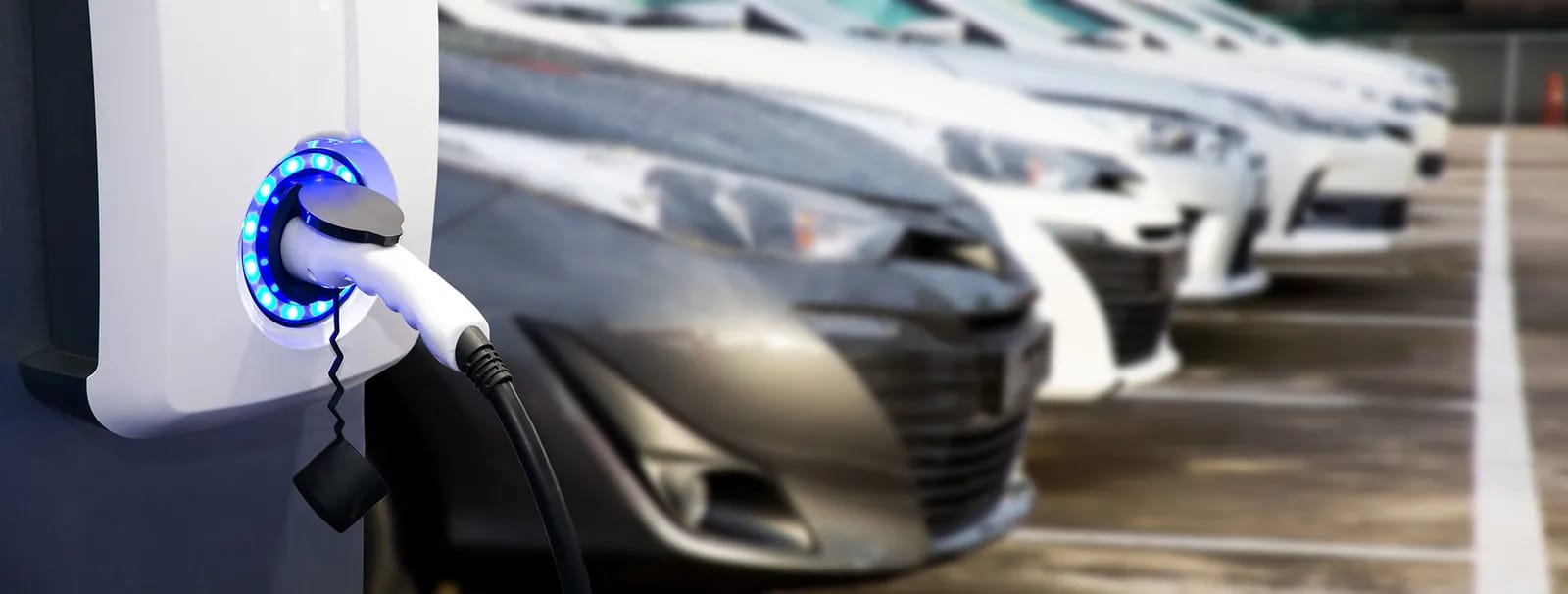
Electricity has become one of the largest controllable costs a grocer carries, sitting beside stock and staff, and unlike those two it is a cost you can fix for two decades with a single investment. A kilowatt-hour you make on your own roof is insulated from tariff rises for the life of the system. Supermarkets also happen to own exactly the surfaces solar wants. The roof is usually a large, clear-span, single-storey expanse with no awkward pitches, and the customer car park is an extensive surface most operators never think of as an energy asset until a solar carport turns it into one. Add the daytime EV charging that staff, fleet and customers increasingly need, all of which absorbs midday generation at full self-consumption value, and the demand profile fits solar more closely than nearly any other building type.
There is a commercial driver beyond the bill, too. Retailer net-zero mandates are now flowing down supply chains, so head-office Scope 2 reduction targets land on individual stores, and on-site generation delivers an auditable cut rather than another pledge that customers, suppliers and investors can see straight through. With the Minimum Energy Efficiency Standard threatening the lettability of leased units, with the Annual Investment Allowance still offering full year-one tax relief, and with the Smart Export Guarantee and Workplace Charging Scheme both live in 2026, the case for solar panels for supermarkets is as strong as it has been in a decade.
How we size a supermarket system
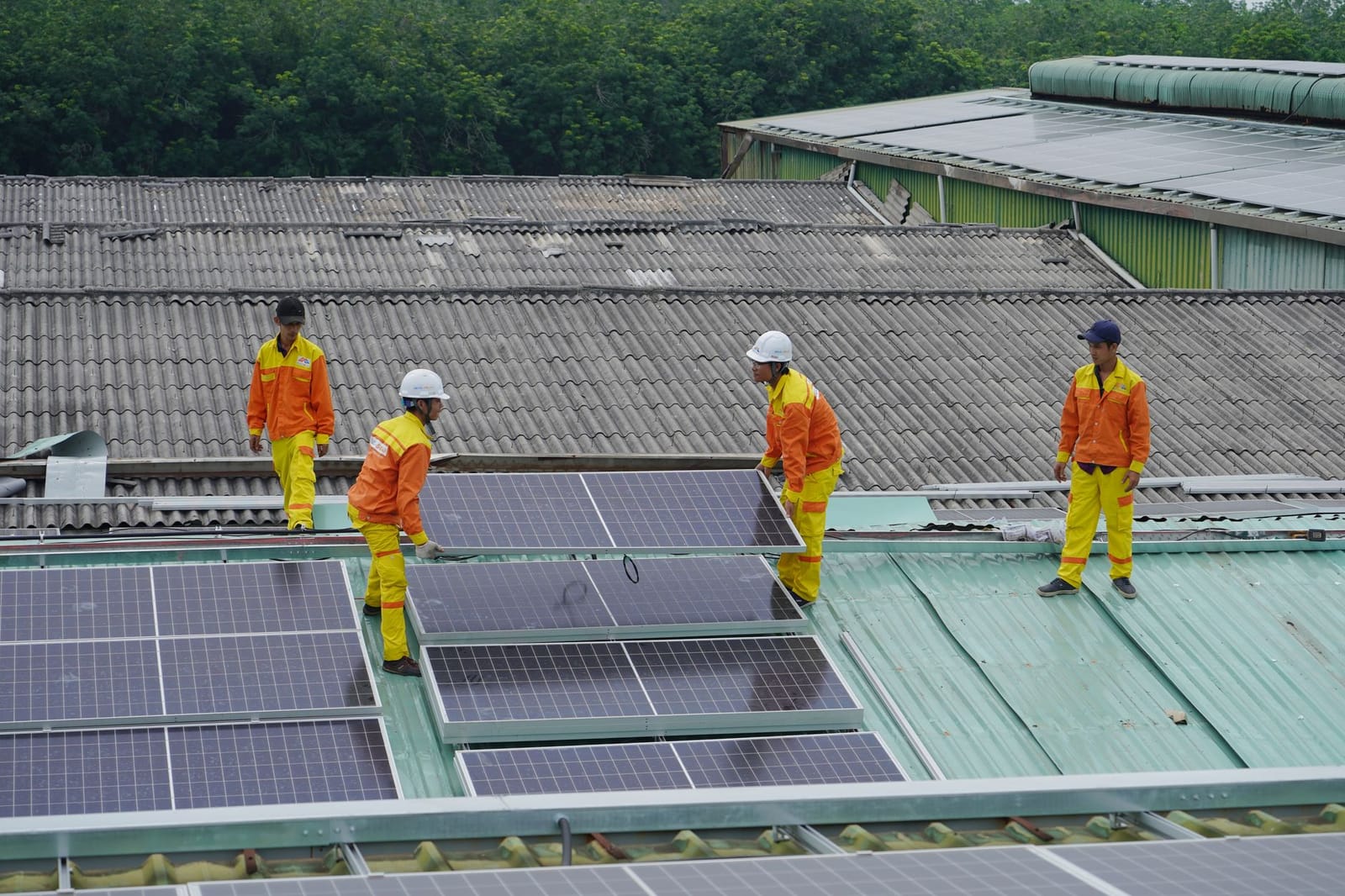
For a supermarket or larger convenience store we usually design a system in the 200 to 1,500 kW range, which is roughly 370 to 2,750 panels across about 1,200 to 9,000 square metres of roof, often with a solar carport over the car park on top. A system that size generates in the region of 185,000 to 1,400,000 kWh a year and saves between 42 and 322 tonnes of CO2 annually. We never simply fill the roof to its edges. Sizing comes from at least twelve months of half-hourly meter data and the real shape of your store's day, because the round-the-clock refrigeration baseload tells us how aggressively we can size for self-consumption. A store whose overnight refrigeration draw never drops below a steady floor can take a proportionally larger array than a building that powers down in the evening. We also model the growth in EV-charging demand into the load before settling the final size, because a system matched only to today's draw can be undersized within a couple of years as charging rises.
Costs, payback and tax relief
A supermarket project typically lands between £150,000 and £1,200,000 depending on store size, roof area and whether a carport is included, with a simple payback near 5 years and effectively free electricity for the fifteen to twenty plus years after that. Cost per kW falls as systems get larger, roughly £750 to £950 above 250 kW and toward £600 per kW above 1 MW, which is why larger-format stores see the best numbers per pound invested. Tax is the single largest lever of all. Because solar sits in the special-rate plant and machinery pool, the 100% Annual Investment Allowance allows most single-store installs to be deducted from year-one profit in full, giving a company up to a quarter of the project value back in tax. One thing trips operators up: solar is barred from full expensing, so spend over the one million pound AIA cap instead draws the 50% First-Year Allowance, and multi-site rollouts above the cap are arranged across both reliefs. Most single stores fall comfortably within the cap and are fully expensed in year one. Our cost guide sets out worked numbers for different store sizes before any survey.
Funding routes
Most supermarket installs are funded one of three ways, and we model all of them side by side so you can see who pays and who benefits. Outright purchase captures the full saving and the year-one tax relief through capital allowances. A power purchase agreement, or PPA, delivers solar with zero capital outlay, with you paying per kWh consumed below your current grid tariff and the system off your balance sheet. Asset finance keeps the system on balance sheet but spreads cost over seven to fifteen years and is usually cash-positive from year one. Beyond the core funding, the Workplace Charging Scheme grant supports EV chargepoints for staff and customers, paying up to 75% of charger cost at five hundred pounds per socket and up to twenty thousand pounds per applicant from April 2026, capped at forty sockets; it pairs perfectly with daytime solar and closes permanently on 31 March 2027, so applications need to go in well before then. The Smart Export Guarantee pays for any surplus, though a refrigeration-heavy store self-consumes most of its generation, so export is a smaller part of the case here. Where a store sits within a larger energy-intensive operation, on-site PV can also improve performance under any Climate Change Agreement that applies by cutting metered grid consumption. Our grants and funding guide maps the right combination to your store.
Compliance and sector considerations
Rooftop PV on a commercial building generally falls under Permitted Development Rights, under Class A Part 14 of the GPDO 2015, subject to size limits and excluding listed buildings and conservation areas, so most stores need no full planning for the roof itself. A solar carport over the car park, and any ground-mount above permitted-development thresholds, does require planning permission, which we factor into the programme from the start. Two store-specific points always shape the design: the roof and the grid. A structural survey of the store roof is mandatory before any panels are loaded, because food retail roofs vary widely in their build-up and residual capacity, and cable routing and roof penetrations have to be designed carefully around food-grade and refrigeration plant so the work never compromises the cold chain. On the grid side, a G99 application is required for connections above 17 kW per phase, which every store-scale system exceeds, though many larger supermarkets already hold an existing HV connection that simplifies integration. The DNO connection can still run six to eighteen months on capacity-constrained networks, so it is usually the longest pole on the job. We build to the SPF1981 rooftop fire-safety standard insurers increasingly require, manage larger jobs under CDM 2015, and carry MCS, NICEIC or NAPIT, RECC, TrustMark and OZEV certification with the ISO 9001, 14001 and 45001 management standards enterprise procurement teams expect.
How we approach the project
We start with your data, not a roof drawing. We pull at least twelve months of half-hourly meter readings so the system is sized to your real refrigeration and trading load rather than an optimistic roof-fill, and we model EV-charging growth into that load before settling the size. We survey the roof structure and check cable routing around refrigeration plant up front, so the fixed-price proposal you receive is the price you pay. We submit the G99 grid application early, alongside the survey, because the connection is the longest pole and starting that clock matters more than almost anything else we do. For any operator with more than one store, we design a single repeatable template, rooftop plus optional carport plus EV charging, that rolls across the estate with standard hardware and one monitoring dashboard, so head office sees every site's live generation, lifetime kWh and CO2 saved in one place for both facilities and ESG reporting. Rooftop installs almost never require closure: we work in zones around your trading pattern and book the only real outage, the final grid connection of typically four to eight hours, for a quiet period. Every install is backed by a ten-year insurance-backed workmanship warranty, with annual operation and maintenance and 24/7 remote monitoring.
An illustrative example
As an illustrative composite based on a typical supermarket project, and not a real named client: a regional store with a 4,500 square metre clear-span roof and a 220-space car park, trading 07:00 to 22:00 with 24/7 refrigeration, faced an electricity bill that had risen to around two hundred and ten thousand pounds a year, with head office having set a Scope 2 reduction target across the estate. The design came in at roughly 648 kW, around 480 kW on the roof and 168 kW over the car park as a solar carport, about 1,190 panels generating in the region of 595,000 kWh a year. With refrigeration running constantly, self-consumption sat near 91%, the annual saving was about one hundred and thirty eight thousand pounds for a payback close to 5 years, and the carport added twelve customer EV charging bays part-funded through the Workplace Charging Scheme. The design was then templated for rollout across a further nine stores in the estate. The figures are illustrative and depend entirely on your store, load profile, roof, car park and tariff.
If your estate spans more than groceries, our pages on supermarket and convenience solar and solar for shopping centres and retail parks go deeper. When you are ready, see the full cost guide, read about grants and funding, request a free feasibility from your meter data, or browse the supermarket solar FAQs first.